
Your knife, forged by you
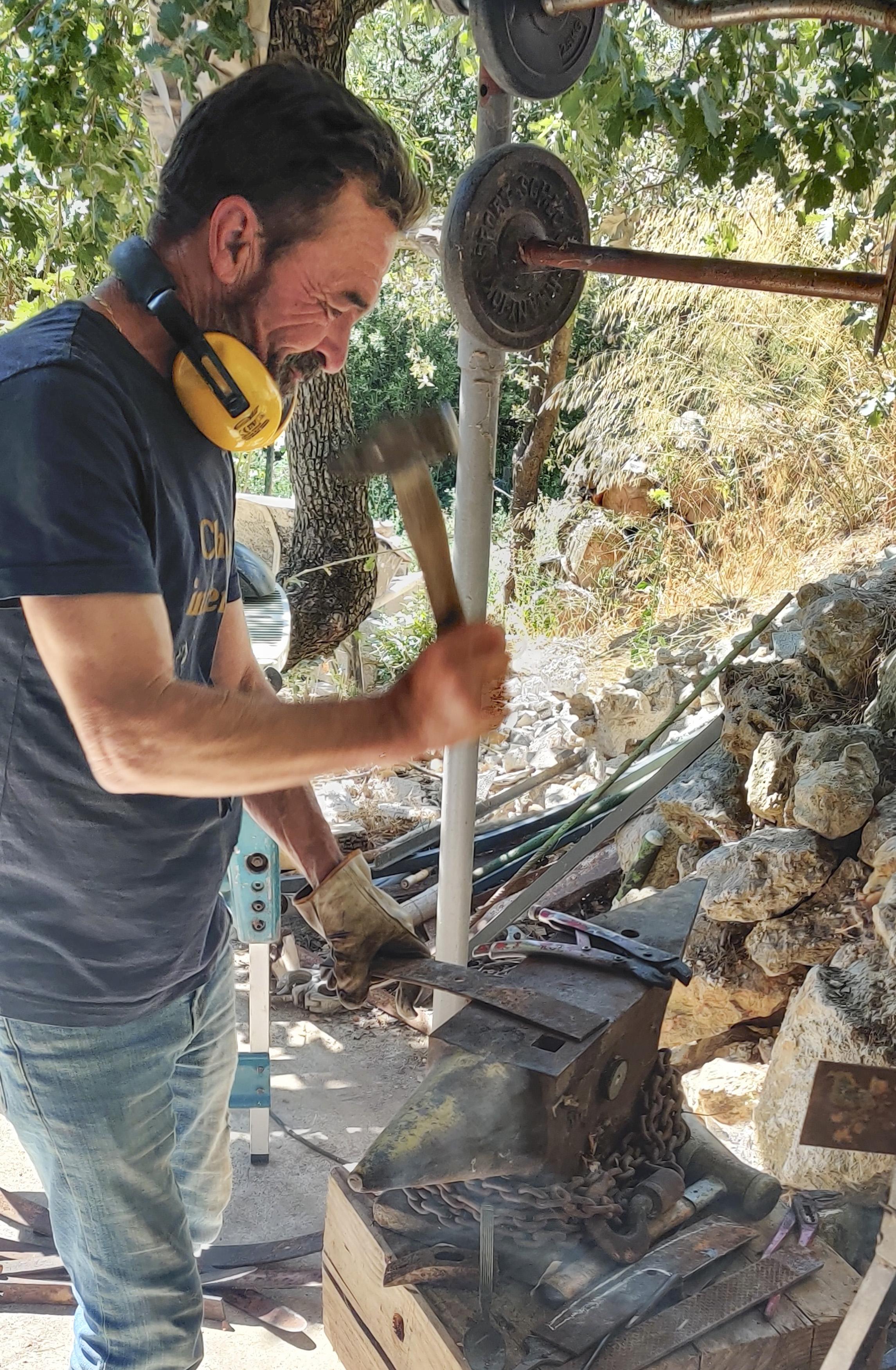
In my workshop you learn to forge a knife from scratch, in the Provençal hinterland, among pines and olive trees and the chirping of the cicadas.
No watching from the side, no kit to assemble: you stand at the anvil yourself, heat the steel, give it its shape. At the end you take your own knife home, and a piece of the south of France with it.
Three course lengths to choose from, depending on how deep you want to go.
The first step
In the morning you choose between a small outdoor knife and a kitchen knife, from a set of shapes I provide. You draw your knife, cut out the template and forge your blade from it: a car spring is straightened, hammered flat, brought into shape. Then comes grinding, fitting the olive-wood handle, hardening and sharpening.
At the end of the day you hold a finished knife in your hand.
Interested? Get in touch!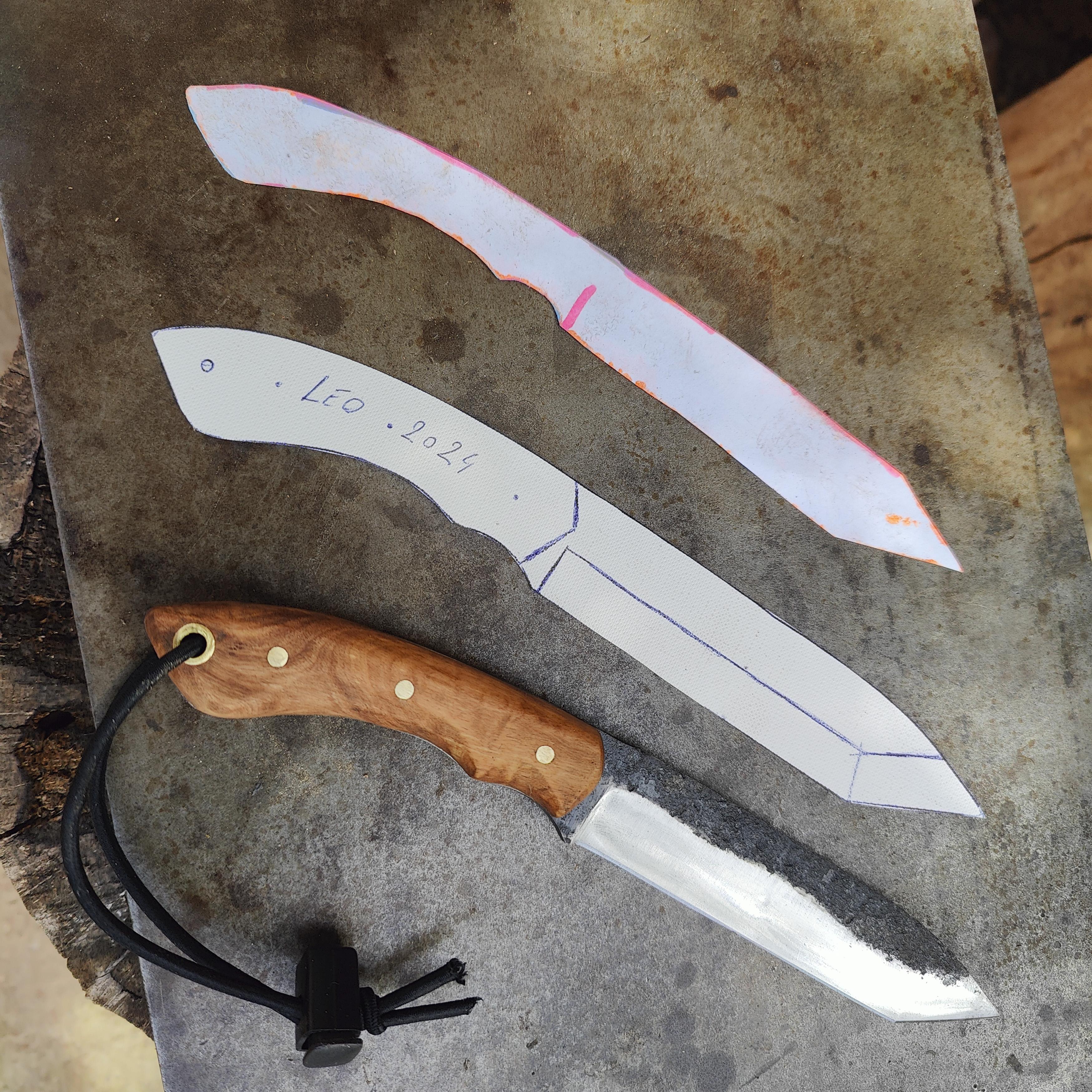
More freedom, more time
You choose between a Corsican-style folding knife and a kitchen knife, and you are no longer limited to a fixed set of shapes: you can design your own. For the handle, horn and antler are available alongside wood. If you like, you can add a ready-made Damascus billet (300 € extra) and forge your blade from that instead of plain steel.
On the first day the blade takes shape; with a folding knife, work on the horn begins that day too. On the second day the handle or mechanism is finished, then hardening and sharpening.
Interested? Get in touch!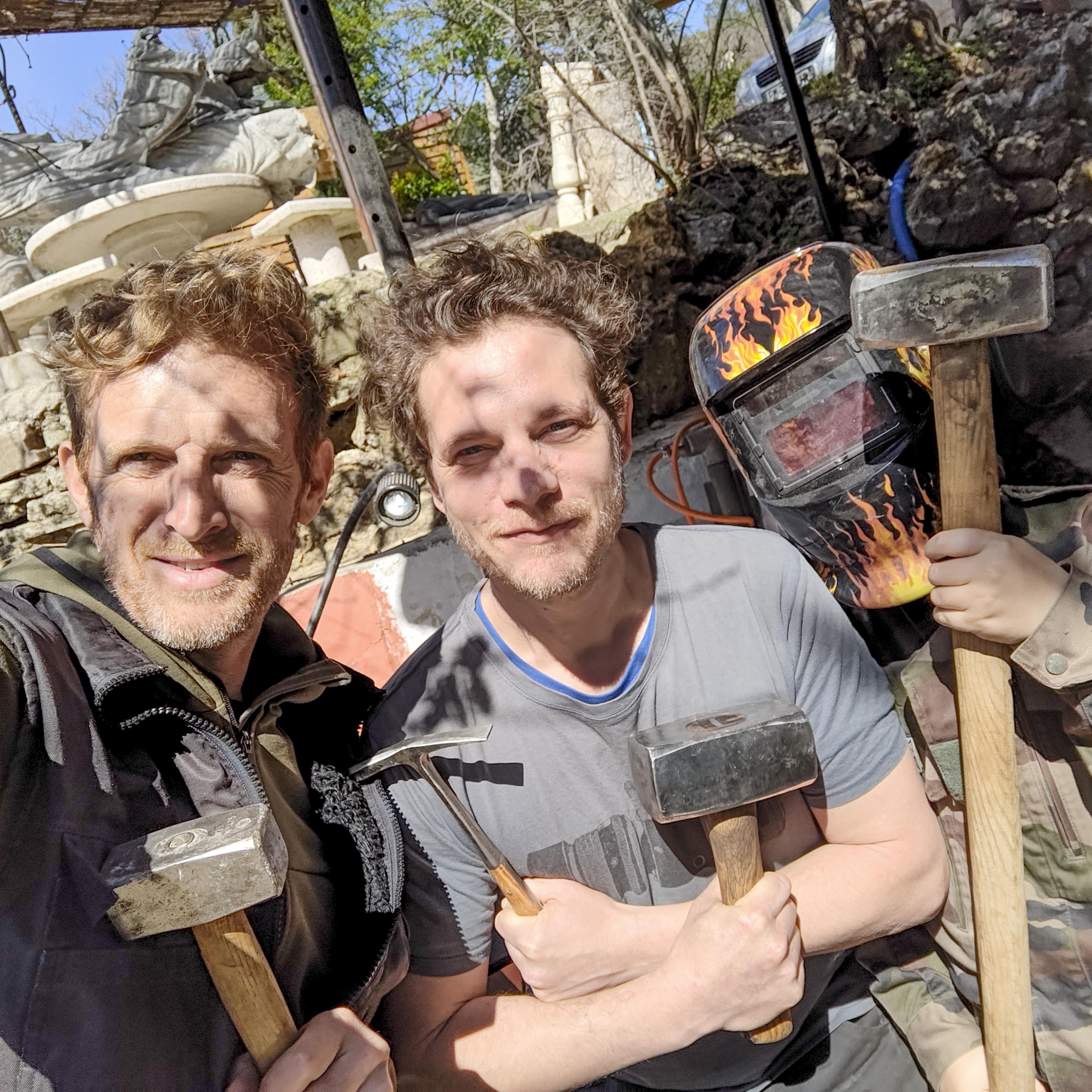
The top tier
Here you forge your own Damascus. Three different steels are forge-welded, hammered flat, folded, again and again, until around 180 layers have formed. That steel, made by your own hands, then becomes your knife, following the same steps as the two-day course.
Forging my own Damascus is, to me, the most beautiful part of the whole craft, and that is exactly what I pass on here.
Interested? Get in touch!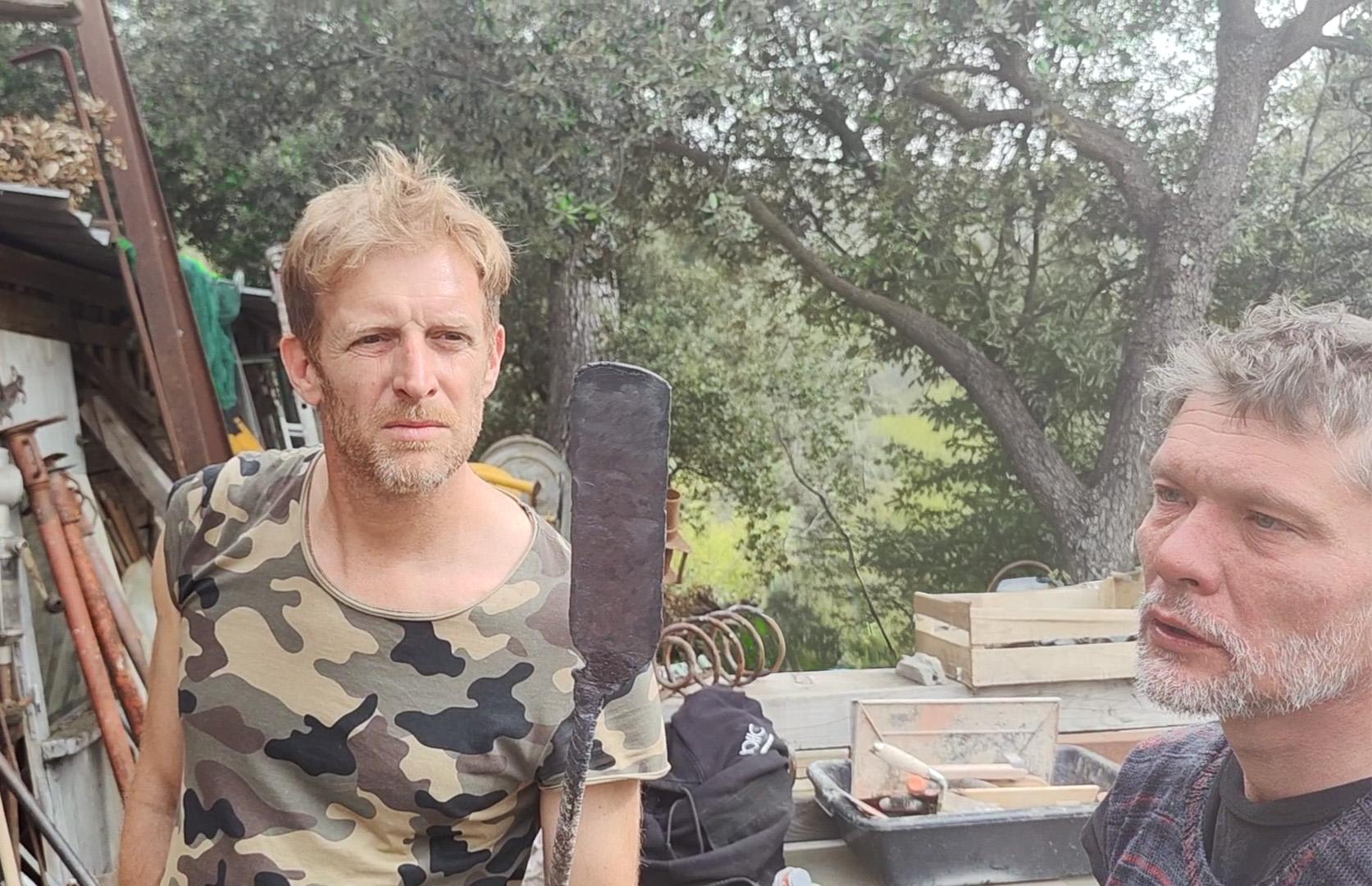
Your forging adventure
Whether you stay one, two or three days, every course day follows the same rhythm. The morning starts around nine with coffee and croissants and a walk through the workshop. Then the forge is lit and you are at the anvil: heating the steel, drawing it out, shaping it, checking it, back into the fire. I show you every move and only step in when it is needed.
At midday we take a break and eat together, Provence-style: vegetables and salad from the garden, olive oil from our own harvest, simple and Mediterranean, the way people eat here. In the afternoon we carry on, depending on the course, with grinding, handle work, hardening and sharpening. Most course days end between five and six, when the light over the olive trees turns golden.
What happens on which day depends on the length of your course. In the one-day course the whole knife is made in a day. In the two-day course the first day belongs to the blade, the second to the handle, the hardening and the edge. In the three-day course there is a day before all that, on which you forge your own Damascus.
Open to children too: the one-day course is open to children from the age of 12, with a parent or guardian present throughout who takes full responsibility for the child.
Courses can be held in French, German or English.
What is included
- Coffee and croissants in the morning
- Lunch from the garden, Provençal and seasonal
- Safety gear: gloves, goggles, mask
- The material for your knife (steel, wooden handle; horn, antler and Damascus billet at extra cost depending on the course)
What is not included
- Dinner
- Accommodation and travel
- A matching leather sheath for your knife
What to bring
- Your own work clothes and sturdy shoes. You will be handling glowing steel and sharp blades: this is no place for open shoes.
Dates and booking
Dates are arranged individually. Write to me with when you would like to come and which course length appeals to you. A course voucher is available as a gift card.
From the workshop


